
Snap happy
Why did I take so many photographs???

Midwinter in Tasmania is the season for decluttering. It seems everyone I know is talking about it. Friends are downsizing their ‘stuff’ in case they eventually have to move to smaller accommodation. Others are muttering about the ‘death-cleaning’ process — aka the Swedish practice of decluttering and organizing our belongings to reduce the burden on loved ones after we die.
I decided a couple of weeks ago to begin my decluttering journey by ‘downsizing’ my photo albums. No adult child wants to inherit the huge number of these I have — 40 and still counting — and that’s not including the additional albums and boxes of photographs that are under our house that belonged to my parents and other dead relies. I am realising that my baby boomer generation is probably one of the last generations to have such huge collections of pre-digital images to deal with before we make our final exit.
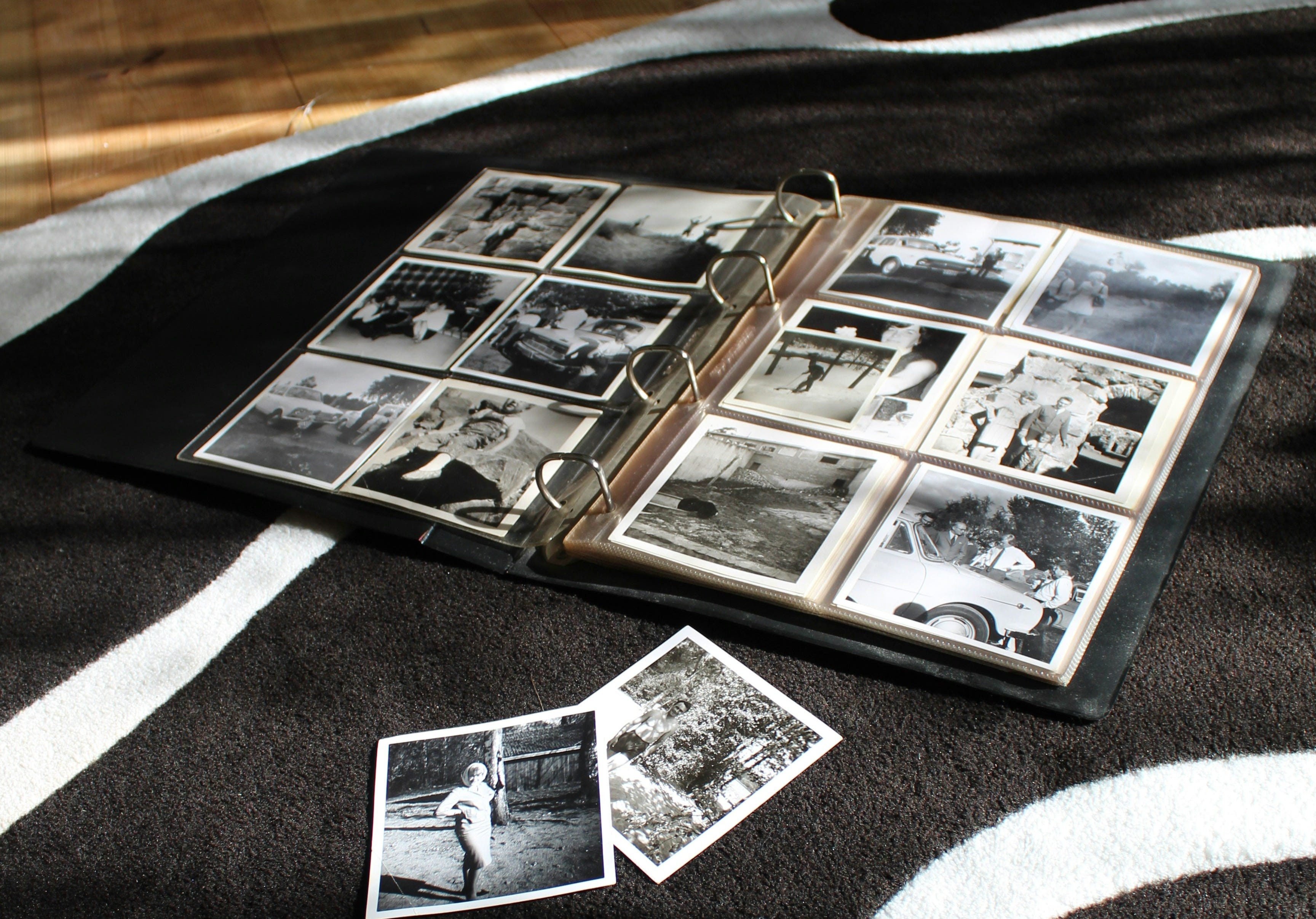
In recent years I’ve only looked through my photo albums after family members or friends have died, when I’ve been on a search for photographs for possible use at their funeral/celebration of life events. As the labels on the spines of many of my photo albums have deteriorated, or peeled off, it has often been a pot-luck search and taken me a while to find what I am looking for.
Now that I have officially embarked on my PDJ (Photo Decluttering Journey) I’ve been spending an hour or more each day sitting on the floor in our spare room, surrounded by albums and hundreds of photographs. I have a feeling this room is probably going to remain in a state of chaos for weeks, if not months. I’m taking photographs out of albums and sorting them into piles relevant to family members, and other people who might be interested in seeing them. I’m also putting photographs that I can’t envisage being of interest to anyone in a big discard pile.
I really don’t like the idea of disposing of family photographs at our local trip. It seems too sad an ending. I was planning on burning those I no longer want to keep but I’m told that burning photographs releases a lot of toxic fumes. There is also supposed to be negative feng shui around burning photographs of people. Maybe buying a cheap shredder might be the best solution. Once shredded they can be put in our home garbage bin.
When I have removed the photographs that are still extractable from all the albums, I plan on doing a massive cull before digitalising the final selection. Hopefully I’ll end up with a much-reduced number of images, no more than an amount needed to fill maybe three printed photo books — one for each of my two children and one for ‘general family’ interest. Fingers crossed I can be ruthless enough to achieve this and can sustain the momentum to get this project done. I have purchased from Temu a bendable-mobile-phone tripod to help me take digital images of the photographs.
Looking at old photographs is an interesting and sometimes uncomfortable experience. It’s a giddy, kaleidoscopic life review. I’ve viewed images of myself from early childhood to recent times and realise I will probably be remembered for my untidy hair. Vanity aside, I am astonished at the number of different houses I have lived in over my life, and by the endless number of gatherings with family, and also with friends. I particularly enjoyed all the occasions with friends and my sister when we all had young children. I loved this stage of Lilli and my life. In addition, there are so many people captured in photographs who have been part of my life during different periods. Some whose names I can’t remember now …
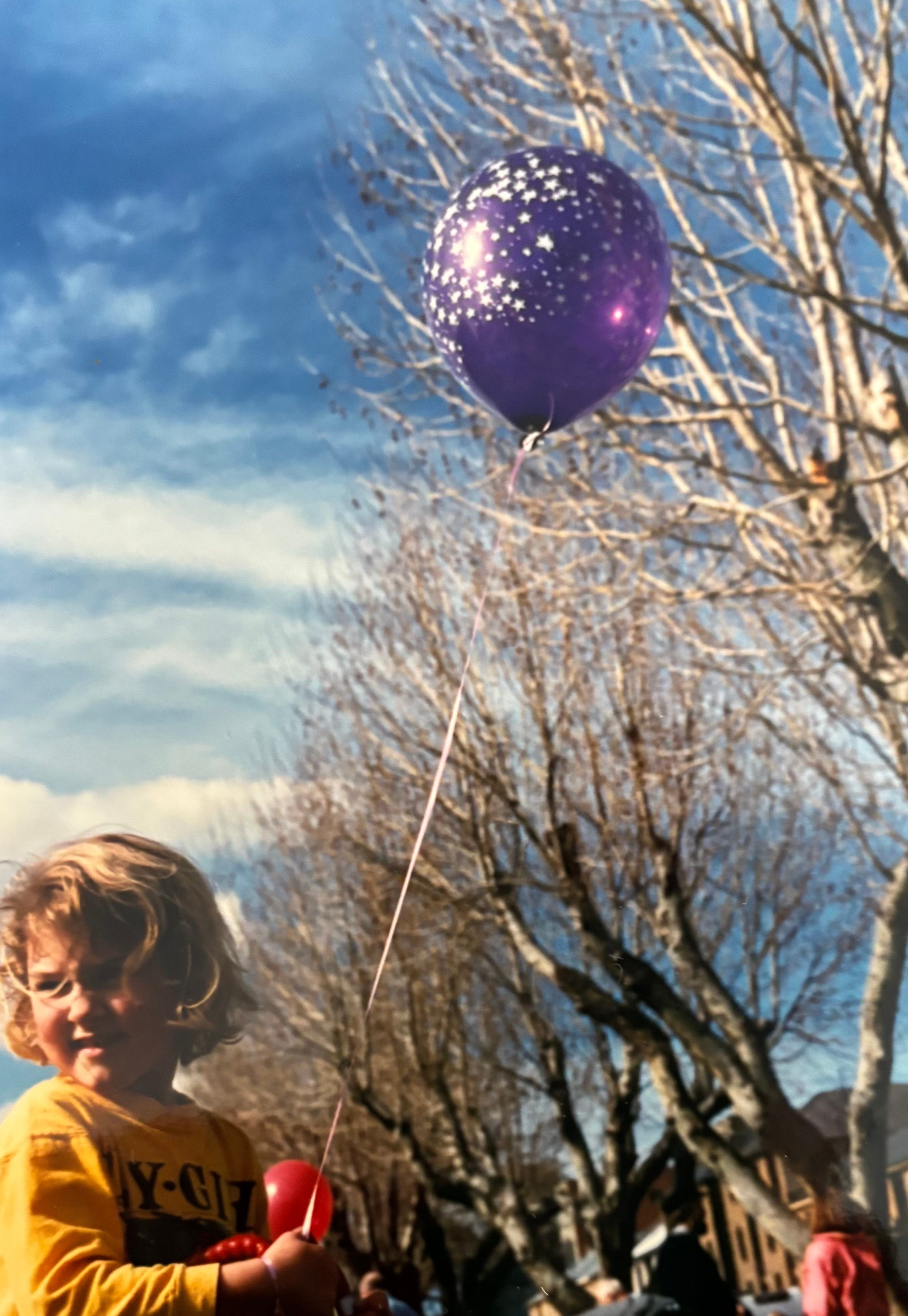
Sitting amidst my personal time capsules of memory has prompted me to send texts and images to some old friends I haven’t seen, or been in touch with, for a very long time. ‘I just found this photo of you … thought you might like to see it’. I’ve had some lovely interactions as a result. Most people are really happy to see photographs of themselves 30 or so years younger. ‘OMG I was actually good looking back then … I remember that day.’
I’ve enjoyed doing this although it has been slowing down progress. I am already worried that the magnitude of this project might prove to be too ambitious for me to achieve. Sitting on the floor for long periods is not great for my back plus I am a woman with many interests, including lying on the couch reading in the afternoons. I also wonder if the generations on the receiving end of this decluttering exercise will even be interested in looking at images of me or family who are no longer around. Today’s younger generations seem to be more future focussed, rather than interested in their ancestors and the past — a trend that I have read is emerging in the new world of AI.
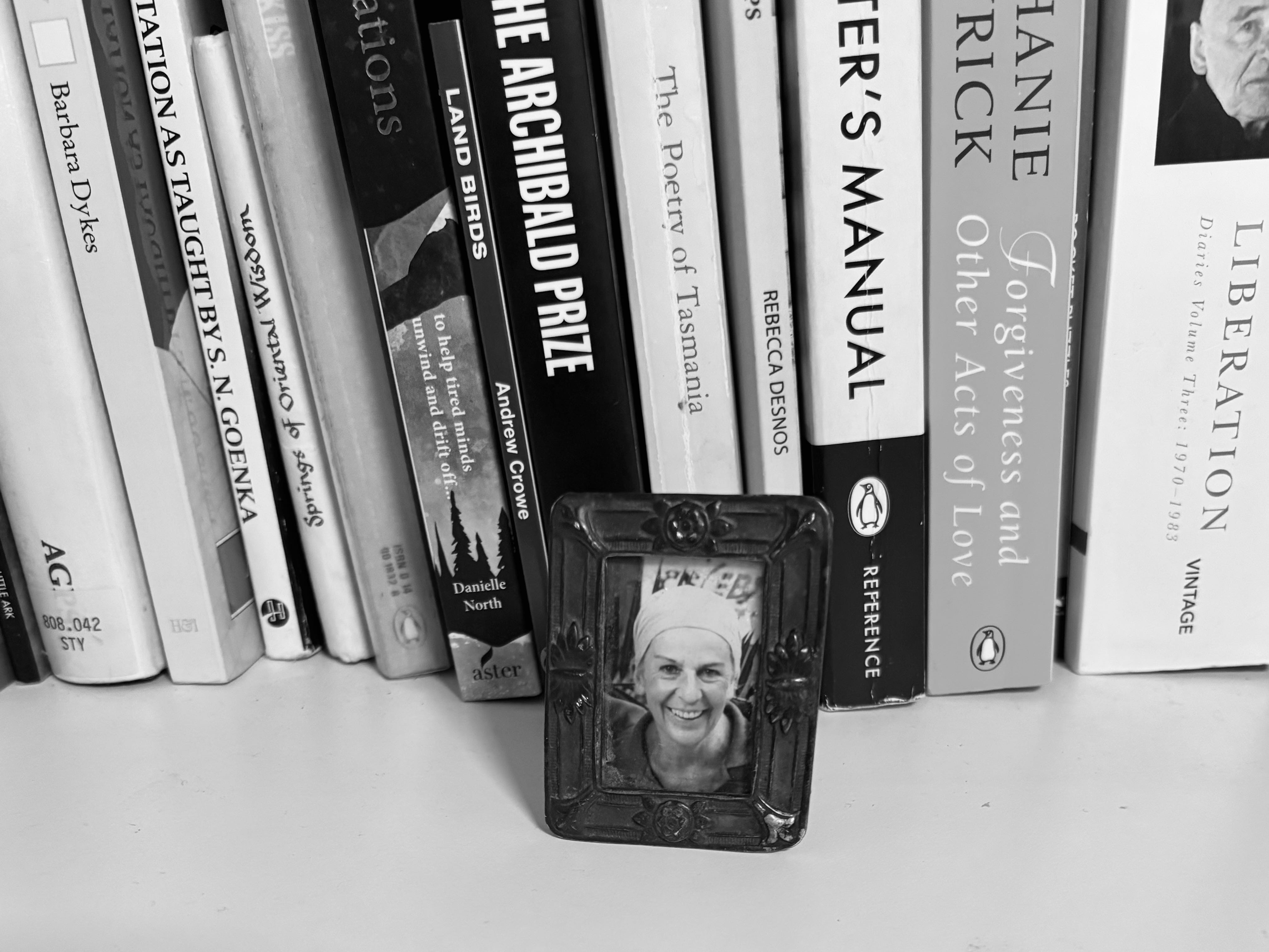
I have a framed photograph of my mother who died over thirty years ago on a bookshelf in my bedroom near where I keep my jewellery. The photograph was passed on to me after my mother’s sister, my Aunt Pat, died; it had been on her bedside table for decades. The kitschy metal frame is less than 5 cm high, and the photograph of Mum is postage-stamp size. Most days, as I choose earrings to wear, I see her smiling face and feel her love beaming back at me.
This one photograph means far more to me than all the photographs I have of her in my photo albums. It has prompted me to think that maybe I should just leave one small, framed photograph of me for each of my children, plus a big envelope of photographs relevant to their lives?
Meanwhile, I will soldier on with my grander ambition of getting rid of all my photo albums and ending up with a much smaller collection of digitalised images and photo books. Next on my decluttering to-do list will be going through all my old letters. Yikes - I have a lot of those!
Some tips I have picked up re downsizing old photo collections
In the first cull it is useful to remove duplicate photographs or near duplicate ones.
Toss out all the scenery shots and poor-quality images.
It’s a good idea to write names and dates, if you know them, in pencil on the back of photographs you intend to keep.
Don’t forget who you are saving your photographs for. Children won’t be interested in photographs of their parent’s holiday snaps or friends. They will probably be most interested in photographs they are in, plus a few of parents, grandparents and other relatives.
I like the idea of using the Marie Kondo approach to keeping only the photographs that ‘spark joy’.
Photographs you don’t want to throw out are best kept in large paper envelopes or in archival-quality boxes.
Everything should be labelled with permanent markers. I should have done this in the first place!
If you’ve undertaken a downsizing exercise of your photographic collection I’d love to hear about your experiences.
Hi Lee. Do you know in all our Marie Kondo-ing, I had completely forgotten the cupboard with the albums. Likewise the video/CD cupboard. So I'll start the photos... one day.
But you ask about disposal. We took 84 kg of private papers (inc personal letters) to Oakdale Industries at Derwent Park for shredding at a price. It's very discretely handled and we felt quite confident that it was private with a capital 'P'. They also do photos, books etc, if that's any help.
My kids are quite interested in the family heritage on both sides, so I would try to leave a photographic trail behind - in duplicate so that each child has their own. But I do like the idea you had of images of people who matter, not holidays and scenery etc. When I look through my i-photos, there are too many garden shots and pics of beaches, Maria Island and people they don't even know. Mind you, they are digital already and give me joy. Marie would say keep them, wouldn't she? Besides, as I become more senile, they may be memory joggers...
Best wishes.
You are so right Jennie - the time component of stopping, looking at photos and going off on tangents 'trying to make sense of it all' is the most difficult part. I'm thinking of buying a printer/scanner now (well pricing them) to see if that might speed things up.