
Unconformity
Why the arts really matter in Tasmania

A week ago, Alan and I drove the long, windy road from Hobart to Queenstown to spend three days at the Unconformity festival — a biannual arts festival that explores ‘new cultural commodities on the wild and mountainous western fringe of Lutruwita/Tasmania’.
The wind howled and the rain fell intermittently during our four-hour drive to Queenstown … and it continued much like this over the days that followed at the Festival. Hardly surprising really, as Queenstown is one of the wettest towns in Tasmania — in addition to being, perhaps, its fugliest. ‘A barren moonscape’ is the phrase often used to describe the local terrain. I sent videos and photos to a couple of friends while we were there, and had to laugh when one commented, ‘Why on earth would you want to go there?’
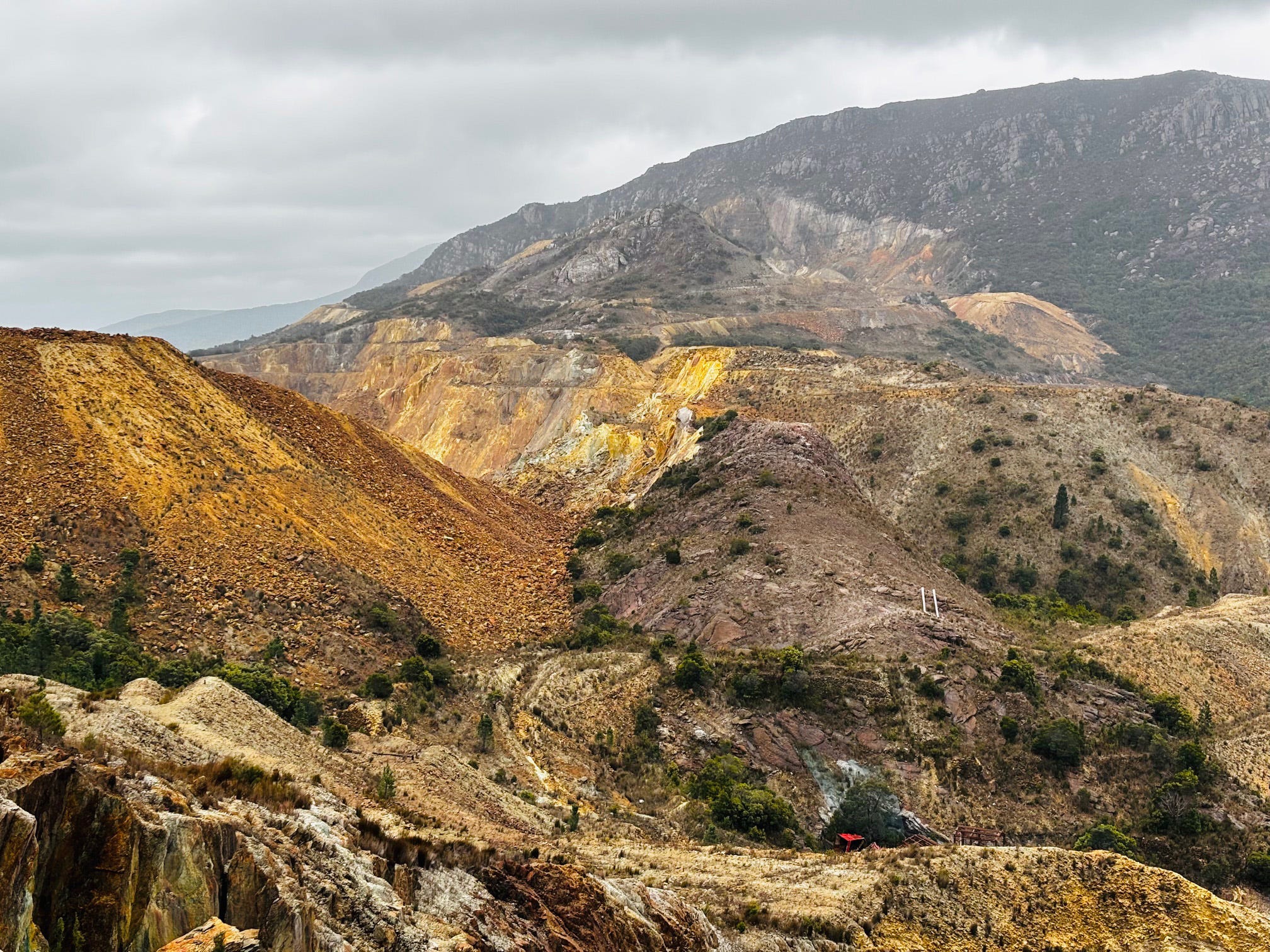
The economic heyday of this historic mining town is now long past. Entering the outskirts of Queenstown, the lack of pride in home ownership is startling. A lot of very basic dwellings are covered in a kind of grey slime from all the moisture in the air, slumped into overgrown lawns, devoid of gardens.
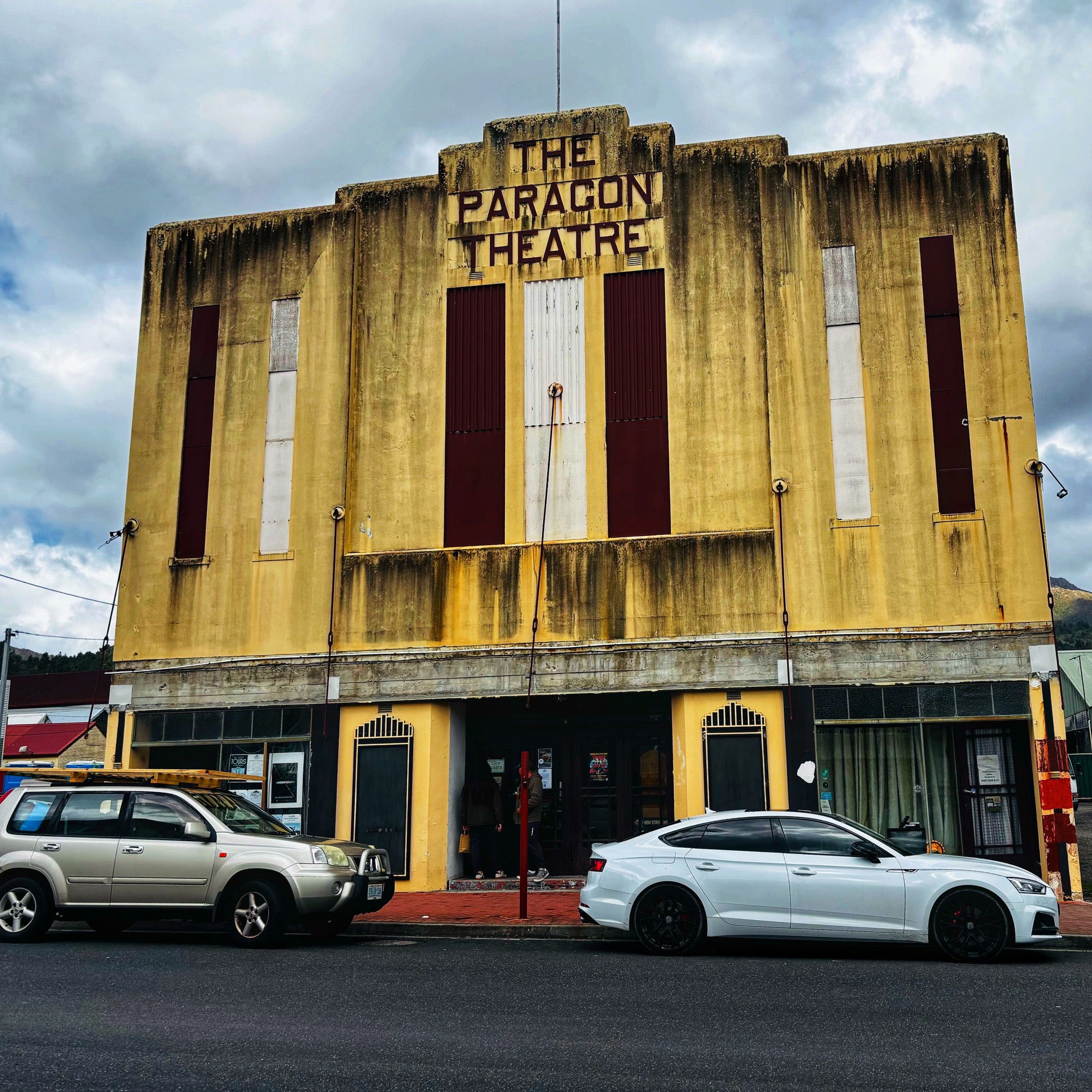
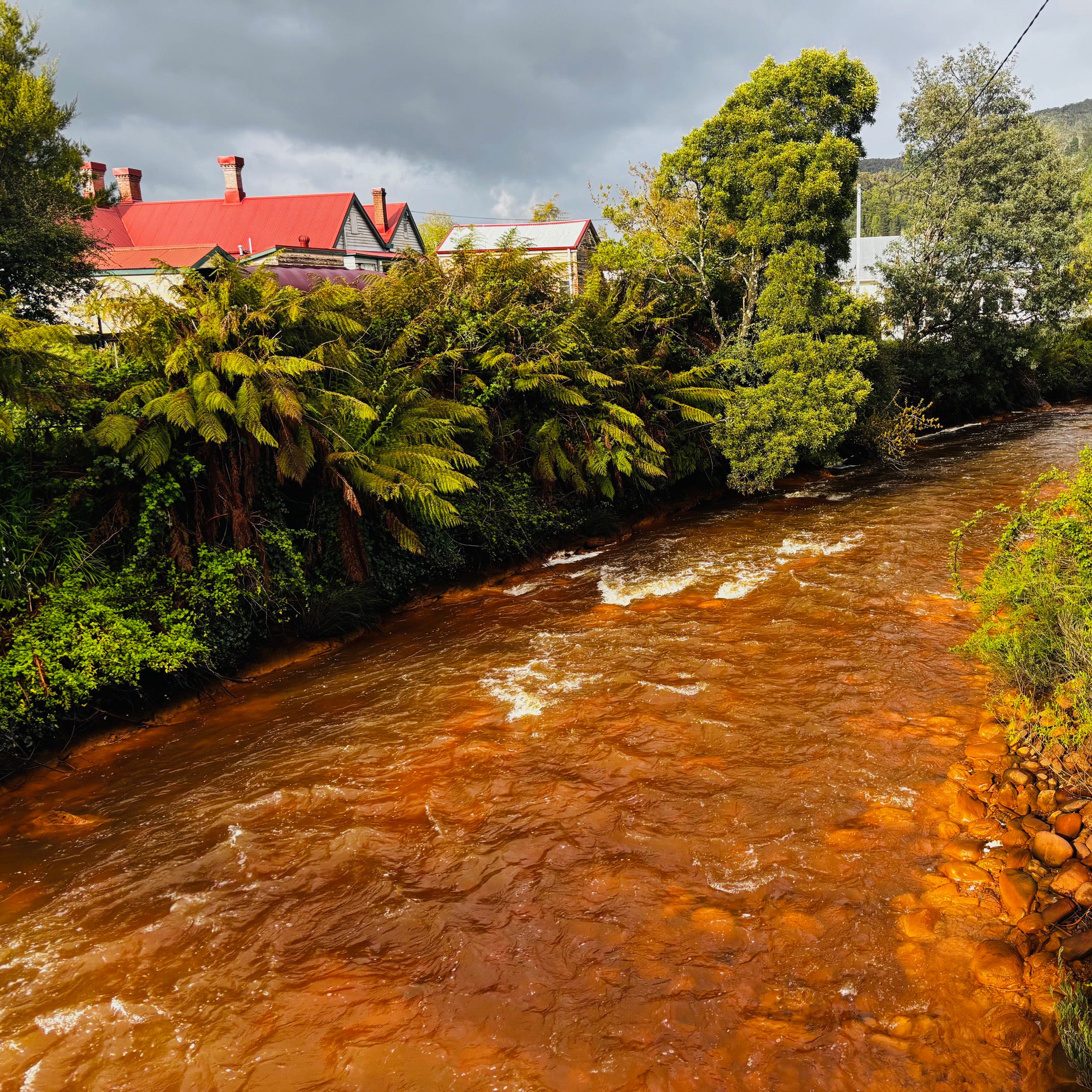
The town’s population, which was around 1,800 at the last census in 2021, is way down from its population of 5,051 back in 1901. Then the town had a collection of hotels, churches, and schools, which are now significantly reduced since the demise of the Mount Lyell mining company. Some large old buildings remain, although many are now empty and look like movie sets for an apocalyptic movie. Amidst it all, the Queen River’s orange-coloured waters (a legacy of more than a century of mining) roar through the town in full force. All very weird and wonderful.
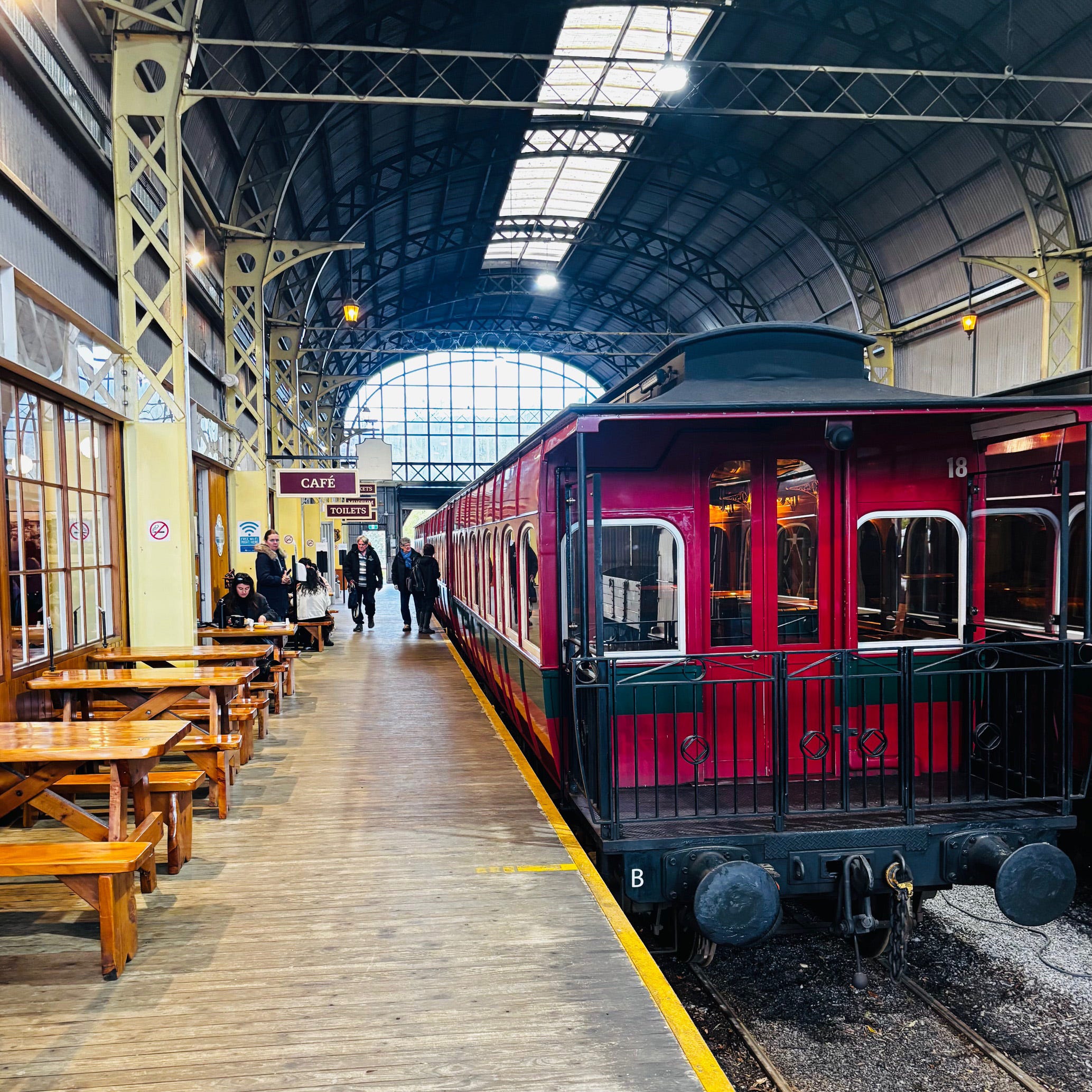
However, it’s not all decrepitude. The grand Empire Hotel overlooks the revived steam train station. The restored heritage railway line is now a big tourist drawcard, along with the Station’s cafe, which is a popular eatery. There is also a very impressive printmaking and workshop facility, PressWEST, in town, which grew out of an initiative started by Ray Arnold, an internationally renowned printmaker and artist, and painter Helena Demczuk. The Governor of Tasmania, Barbara Baker AC, was visiting this vibrant creative lab while we were there.
It’s the bizarreness of Queenstown that makes it a perfect setting for the Unconformity arts festival. This, and the fact that over the last two decades, a number of artists have moved into the town. Cheap real estate costs were probably the early catalyst for this, and as more artists followed, the town gained a reputation for being a mecca for artists. Cheap housing and studio rents. A network of other artists. A gateway to wilderness.
Shane Pitt, the mayor of the West Coast council, says that the town has changed a lot. ‘We’ve seen arts and culture take over.’ And of course, holding arts festivals is a great way to boost a struggling economy.
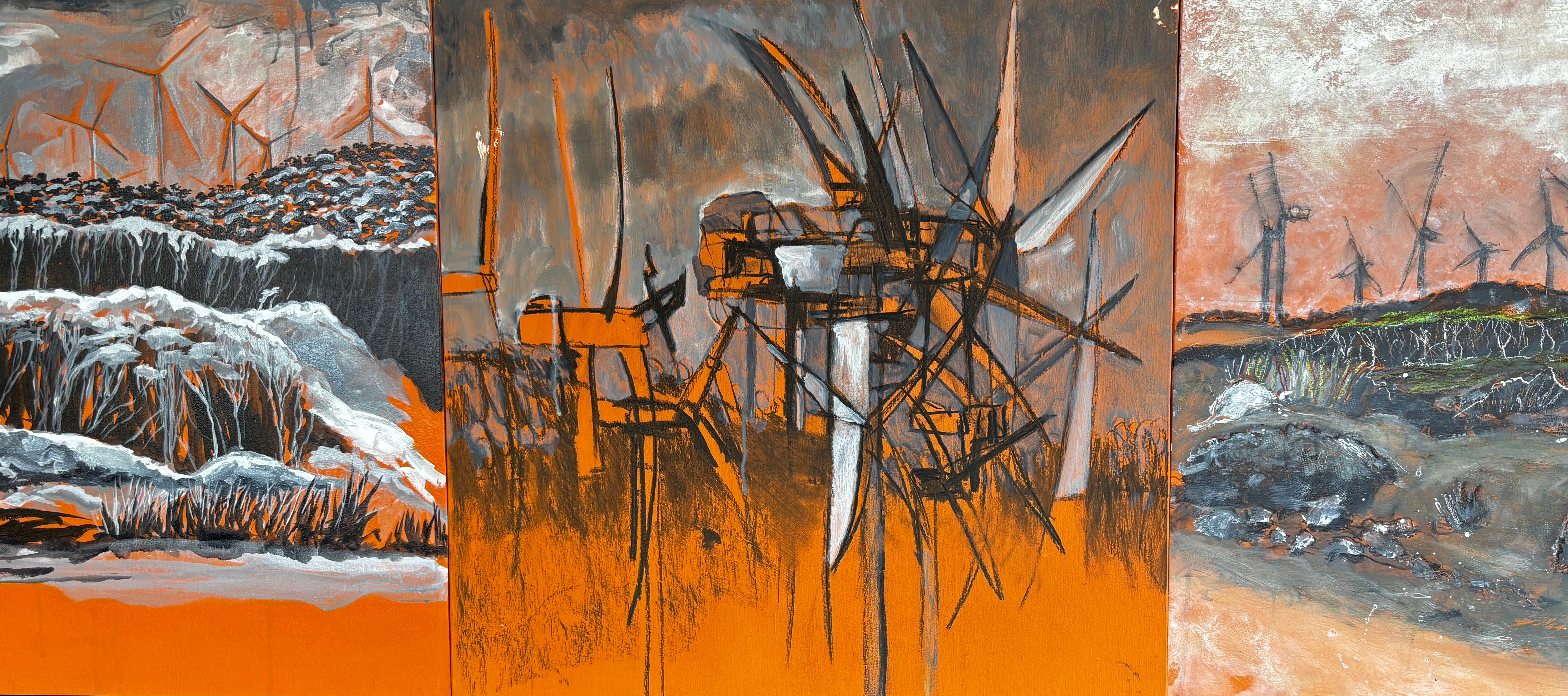
We enjoyed going on this year’s Unconformity artist’s trail … meeting local craftspeople, artists, seeing some great art, and getting to know the backstreets of ‘Queenie’ … (where we did come across some gracious old houses and gardens).
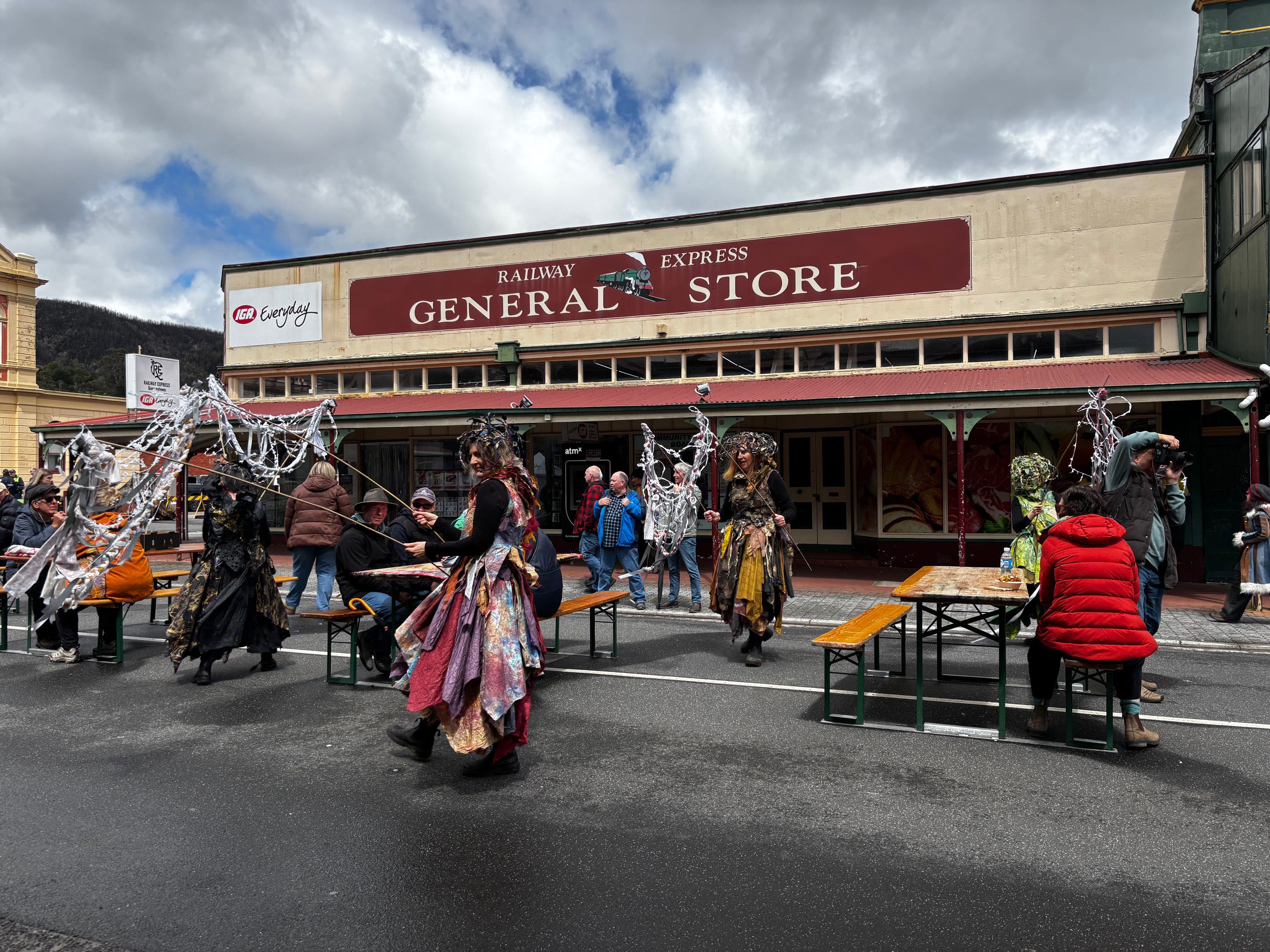
The highlight of the festival for me was the Semaphore Score event created and produced by Margaret Woodward, Justy Phillips, and Cath Chick. The Semaphore Score was ‘propelled’ by an artefact Margaret came across in the Tasmanian Archives: the 1868 Tasman Peninsula’s Semaphore Code Dictionary, which was used to preserve over 3,000 words and phrases used to compose messages communicated by using flags along a network of eight semaphore signal stations, between the penal settlement at Port Arthur and early Hobart Town.
Margaret extended the scope of the words in this dictionary to compile a new Semaphore Score dictionary. Festival goers were invited to compose a message on a ‘Signal Card’. These cards were dropped in a postbox at Penghana historic house, which is perched above the town and reached by climbing 83 steps up from the road below. Every 15 minutes in front of the house, a member of the Signal Team in orange overalls would relay the number-coded message on a card using bespoke Festival flags to communicate to another signal station across the valley. Each message was captured at this second signal station and later added to the Festival’s website.
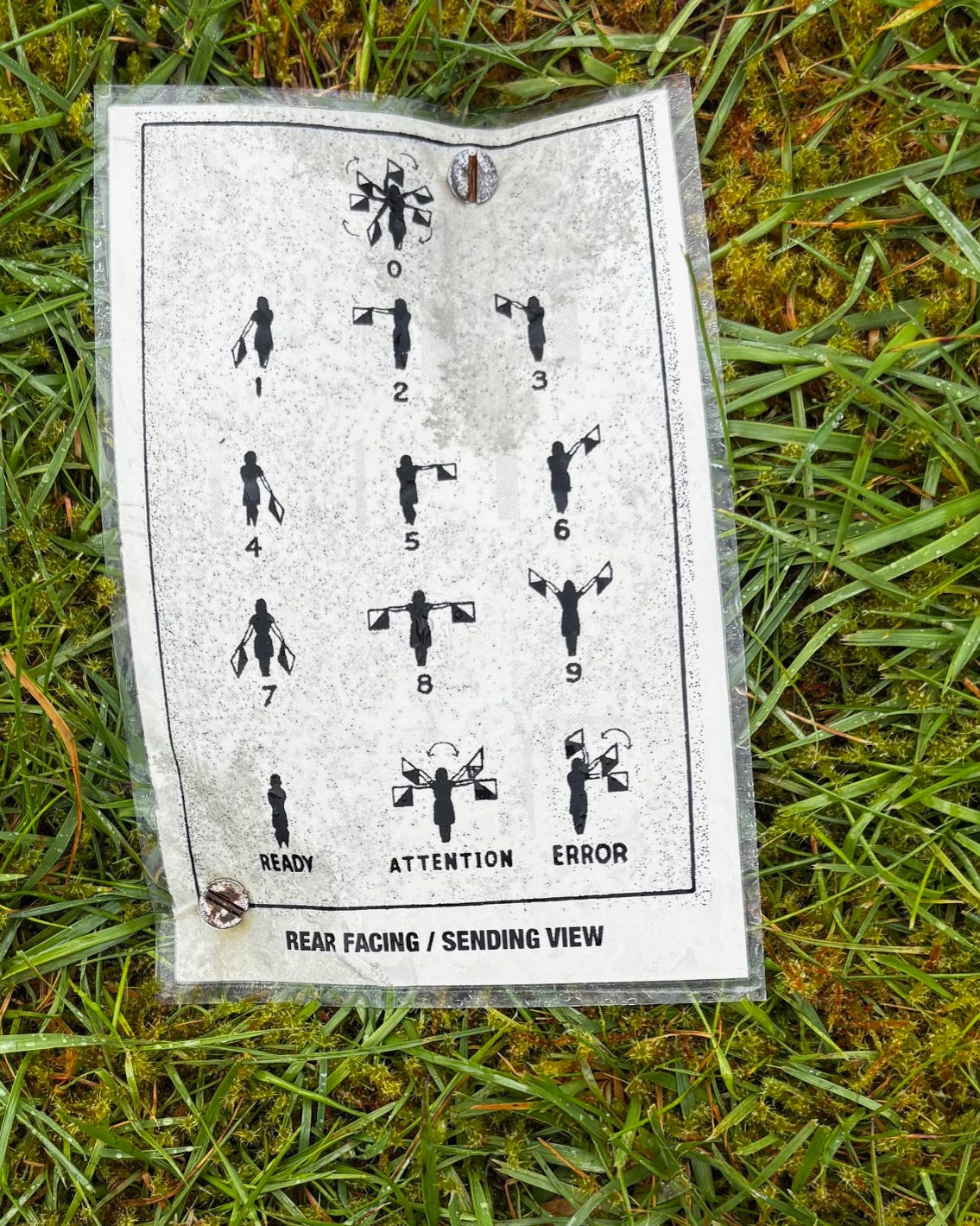
I loved the theatre of this and thought it was a very powerful way to send an intention into the ether. I composed my message thoughtfully on Friday night … but I think time ran out before my signal card could get to the top of the pile on Saturday. It didn’t end up being relayed via the flag semaphore system. I still think that writing a message using the Semaphore Score booklet was a vehicle for my intention to set off on its own flight. Such an intriguing concept!
We enjoyed the Physical Education Performance at the Queenstown PYCC on the second morning of the Festival. We thought we were going to watch a performance — not realising we were to be co-performers! It was a lot of fun — the most laughs I’ve had during a workout. Each of us wore ‘Debbie’ name tags and followed along with the silly routines.
On Saturday afternoon, we went to the book launch of ‘Gert’ by Jacqui Malins. The launch performance involved Jacqui reciting narrative poetry, singing and whistling, with images projected across her body and the stage behind her.
‘Gert’ tells the story of a West Coast pioneering woman, Gert Bradshaw, who, with her husband, Cliff, and their 12 children, lived near Queenstown in a town called Princess River, which was ‘flooded’ in the early 1990s to make way for Lake Burbury. Gert was born in 1906 and died in 2001. Members of her family were in the audience at the launch, which made it a very evocative and moving event.
Gert’s story is brought to life through the voice of the Princess River, a tributary of the Queen River which flows through the heart of Queenstown, famous for its acidic orange-coloured waters. In GERT, the Princess River observes the landscape and human occupation back into deep time, as well as the daily life of Gert and her family, who live on the Princess River’s banks.
With its history of colonisation and settlement, mining and smelting, timber-cutting and hydroelectricity development, I found in Queenstown a potent microcosm of challenges facing communities all over Australia and the world, in the face of competing pressures for development, environmental protection, and gentrification.
— Jacqui Malins
Unconformity 2025 was an unusual and enjoyable experience. We went to some great events, saw a lot of interesting art, and learnt a lot about the history of the west coast of Lutruwita over the last century or two. Highly recommend going to the next one …
While on the west coast, we picked up some huon pine offcuts in Queenstown and Strahan for my daughter and her partner’s new jewellery venture. They use Tasmanian timbers and resin to create interesting earrings and other pieces. You might like to check it out.
Thank you for reading this post!
Wow you packed a lot in Lee and brought this event to life for me in your vivid descriptions - thank you!
Your wonderful writing has got me interested and I'm definitely putting this on my calendar for 2027.